
Border-Transgressiveness
Beyond the Illusion of a Last Island of Identity
Elisa R. Linn examines aesthetic practices in the GDR and in the aftermath of German reunification that challenge prevailing technologies of vision, regimes of representation and 'borderisation', as well as dominant narratives of German identity and exclusion.
‘I hope the radio stations will play this record, because I am not an isolated case but one of many, unrecognised, a stranger in my own country.’ These are the lines from the lyrics of Fremd im eigenen Land (Foreign in My Own Country, 1992), the breakthrough song of Advanced Chemistry, a band founded in Heidelberg in 1987 and widely regarded as one of the pioneering acts of German hip-hop. The music video was filmed at the Old Bridge in Heidelberg and features the three rappers Torch, Toni-L and Linguist performing before a large crowd, which sings along to the lyrics and cheerfully dances in the streets. It aired on MTV at a time when German-language hip-hop rarely made it onto the channel. The song’s heavy rotation carried it well beyond its usual audience, turning it into a defining cultural and media moment.
The song had already been written before the racist mob attacks erupted in Rostock-Lichtenhagen in August 1992 – only a few years after reunification. Televised news images of the burning Sunflower House, cheering bystanders and street violence were broadcast around the world – images of a pogrom that Advanced Chemistry confronted by adding a sample from the Tagesschau news broadcast as an introduction to the track. This addition tied the song explicitly to the Rostock events, reframing it as a direct response to the escalating racist violence and, more specifically, to how media coverage simultaneously depoliticised and sensationalised it.
Journalist Jochen Schmidt went so far as to describe Rostock-Lichtenhagen as ‘the first and only arson attack in German media history to be broadcast live’.1 In retrospect, media scholars have described the television cameras as a stage on which the perpetrators performed for the media; some reportedly even offered to give a Nazi salute to journalists in exchange for fifty Deutsche Marks. In the aftermath of the pogrom, media coverage was eventually widely criticised for framing the racist attacks as ‘riots’ or ‘disturbances’, thereby obscuring their xenophobic character. At the same time, the voices of those targeted were largely absent from news coverage, which felt like an exchange between the roles of victim and perpetrator, casting refugees and former contract workers as partly responsible for the violence directed against them. It was also in 1992, the year of the Rostock-Lichtenhagen pogrom and the release of Advanced Chemistry's Fremd im eigenen Land, that the German dramatist Heiner Müller made an observation that reflected what appeared to be a reunified Germany’s aspiration to assert itself within Europe’s evolving necrocapitalist landscape:2
1. Jochen Schmidt, quoted in Anh Tran, ‘Rostock-Lichtenhagen: How the Media Failed,’ Deutschlandfunk, August 24, 2022, https://www.deutschlandfunk.de/das-versagen-der-medien-100.html.
2. Achille Mbembe, ‘Necropolitics,’ Public Culture 15, no. 1 (2003): 11–40; Achille Mbembe, Necropolitics (Durham, NC: Duke University Press, 2019).
‘The scars cry out for wounds: the repressed potential for violence […] breaks through in attacks on the weaker: meaning asylum seekers and (poor) foreigners […] The poor against the poorest. Not a hair is touched on any real estate shark. […] A drive through Mecklenburg demonstrates: at every gas station, the victory banners of the oil corporations; in every village, instead of the familiar stationery stores, McPaper & Co. In the sea of so-called “foreign infiltration”, being German is the last illusion of identity, the last island. But, what does it mean to be German? The answer given by a skinhead to the question, “Why are you proud to be German?” was: “We are the people of poets and thinkers” – “For example?” “Brecht and Einstein.”’3

Although the Berlin Wall had fallen, ‘walls’ had by no means disappeared. They had merely shifted, now running along the expanding frontiers of ‘Fortress Europe’. At the same time, the fault lines within Germany, shaped by the transformation shocks of post-reunification, were forcefully suppressed beneath the yearned-for image of a successfully united, homogeneous nation: Fractures were not only reflected in economic and social East-West disparities but also in deeper questions of identity, which remained unresolved despite the illusion of national unity. The so-called ‘Baseball Bat Years’ (Baseballschlägerjahre) became a symbol, especially in East Germany, of an aggressive renegotiation of national identity played out on the streets. As in the case of Rostock-Lichtenhagen, the renegotiation took place at the expense of those who had even less protection and no voice in the new liberal order and media reality of the 1990s, shaped by ‘confrontainment’, confession talk shows, and affect-driven ‘infotainment’: racialised minorities, migrants, asylum seekers, queer people and all those who did not fit into the narrow vision of a united German nation shaped by the principle of descent (jus sanguinis, literally ‘right of blood’) and its literary and philosophical tradition rooted in enlightened Prussianism rather than in the visions of Bertolt Brecht and Albert Einstein.
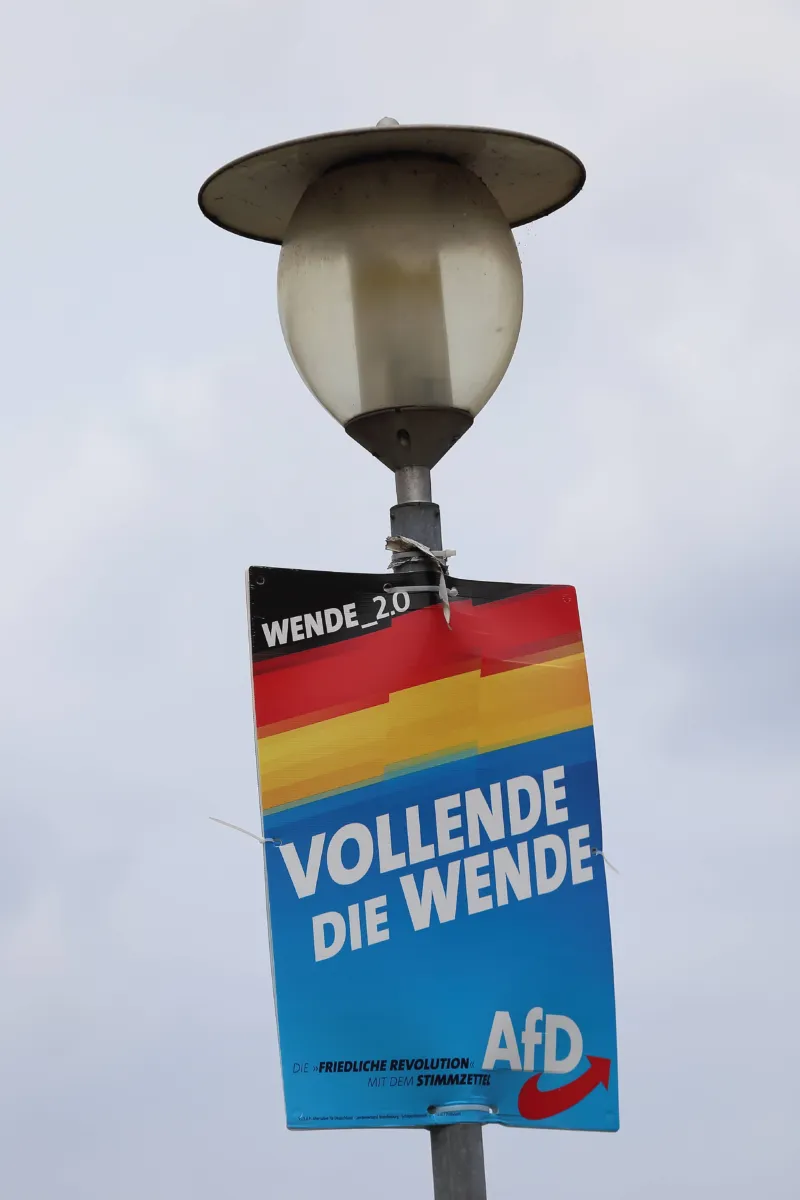
Similarly to Advanced Chemistry’s song, Rosa von Praunheim’s public outing of Hape Kerkeling and Alfred Biolek on the German television talk show Explosiv – Der heiße Stuhl in 1991 can be understood as a political intervention in the immediate aftermath of reunification and, in his own words, a ‘cry of desperation’ at the height of the AIDS crisis, seizing upon the new reach and visibility of commercial television to demand greater public recognition and solidarity at a moment when the boundaries of belonging were being violently redrawn through racism and homophobia. In 1993 – two years after Praunheim’s ‘cry of desperation’ and a year after Heiner Müller’s remarks – the ‘Asylkompromiss’ (asylum compromise) was passed, widely regarded as a setback for human rights.4 Around the same time, the CDU’s then-presidential candidate, Steffen Heitmann, publicly used the term ‘Überfremdung’ (foreign infiltration), supposedly to appeal to voters on the right. As a term rooted in antisemitism, it was already in use by 1921 before being deliberately propagated under National Socialism to denote an alleged excess of foreign and harmful influences on society, culture, nation or language.5 The prefix über conveys an anxiety-driven sense of excess, a fear of marginalisation within one’s own society, an expansive narrative that conjures the spectre of the ‘eradication of the German people’.6 Eventually, as the language of ‘Überfremdung’ circulated between political rhetoric and the mass media against a backdrop of escalating racist and right-wing violence, the term was designated Germany’s ‘Unwort des Jahres’ in 1993. As the Asylum Compromise was negotiated, reunified Germany was already staged on television primarily as a national narrative of liberation and success. Iconic images – the fall of the Berlin Wall, jubilant crowds standing atop it, black-red-gold flags, Helmut Kohl as the statesman of national unity addressing cheering audiences – came to dominate media coverage, recycling the promise of a newly liberated nation and blühende Landschaften (blooming landscapes), although disillusionment had already begun to set in. Simultaneously pushing the growing realities of racist violence, migrant precarity, and the erosion of asylum rights to the margins of the national imaginary not only erased the histories of migration within Germany but also obscured decades of East-West antagonism during the Cold War – a conflict physically embodied by the Berlin Wall, which Willy Brandt famously condemned as the ‘Wall of Shame’.
The Antifaschistischer Schutzwall (antifascist protection wall), as the Berlin Wall was officially termed by the SED under Walter Ulbricht, was not only designed to prevent mass emigration and defend against the class enemy but also served as a barrier against the ‘stranger’ – ‘the one who comes today and stays tomorrow’.7 Here, the ‘stranger's perspective’ of self-representation was absent not only from television’s defining moments during the post-reunification years but also, long before the fall of the Berlin Wall, in East Germany, where the production and circulation of autonomous media, images, films, texts and exhibitions beyond state propaganda became sensitive matters subject to both state censorship and its internalisation.
3. Translated from German into English by the author. Helen Müller and Clemens Pornschlegel, Für alle reicht es nicht. Texte zum Kapitalismus, ed. Heiner Müller et al. (Frankfurt am Main: Suhrkamp, 2017), 301.
4. Heiko Langanke, Die extreme Rechte in der Bundesrepublik: Ideen, Ideologien, Strategien (Opladen: Leske + Budrich, 1996), 102.
5. Cornelia Schmitz-Berning, Vokabular des Nationalsozialismus (Berlin: De Gruyter, 2010), 615.
6. Bernd Wagner, ed., Handbuch Rechtsextremismus: Netzwerke, Parteien, Organisationen, Ideologiezentren, Medien. Ein Projekt des Berlin-Brandenburger Bildungswerks e. V. (Reinbek bei Hamburg: Rowohlt, 1994), 8.
7. Georg Simmel, ‘The Stranger,’ in On Individuality and Social Forms, ed. Donald N. Levine (Chicago: University of Chicago Press, 1971), 143–150, here 145.
The Berlin Wall as a Condom Against the Stranger
As early as 1990, the Deutsche AIDS-Hilfe reflected on the protectionist function of the Berlin Wall, remarking: ‘The Wall was the condom of the GDR.’ This metaphor not only evoked the GDR’s preventive isolation policy, designed to seal off its borders against mass flight, but also implied its role in containing HIV, both externally and internally during the AIDS crisis, by restricting contact with those deemed unworthy of coexisting in the same public sphere, even sharing the same air. In Post/pandemisches Leben (2020), published during the Covid-19 pandemic, Yener Bayramoğlu and María do Mar Castro Varela trace the notion of conspiracy back to its Latin roots – con [together] and spirare [to breathe] – highlighting its original meaning as ‘breathing together’, a meaning that underscores how the formation of communities is inherently tied to exclusion: the deliberate marginalisation of those whose very breath can be denied.9 Susan Sontag already observed in Illness as Metaphor (1978) and later expanded upon this in AIDS and Its Metaphors (1989) how plague and war metaphors in particular serve to construct a ‘disease of others’, whether by associating it with a suspected virus, its origin, or specific risk groups, as was also the case in the GDR. In 1987, the AIDS Advisory Group presented the Central Committee of the GDR's ruling party with a ‘revised assessment’ and a xenophobic misjudgement of the AIDS crisis:
9. Yener Bayramoğlu and María do Mar Castro Varela, Post/pandemisches Leben (Bielefeld: transcript Verlag, 2020), 69.
10. Draft of a memorandum for the Secretariat of the Central Committee of the SED on preventing the transmission of AIDS to GDR citizens, Berlin, n.d., Bundesarchiv Berlin-Lichterfelde, DQ1-12723, 1; Henning Tümmers, AIDS: Autopsie einer Bedrohung im geteilten Deutschland (Göttingen: Wallstein, 2017), 262. Translated from German
‘The fact that twice as many “foreigners” as GDR citizens had so far been found to have antibodies to AIDS […] and that some of the GDR citizens recorded as HIV carriers had apparently acquired the infection through close contact with foreigners (“Africans”), made it clear that the main danger to GDR citizens at present was intimate contact with foreigners from the main affected countries.’10
The consequences included not only isolation measures and forced, secret testing, but also the discreet repatriation of contract workers to their countries of origin in order to avoid public hysteria over AIDS. Eventually, the GDR leadership’s portrayal of the Wall as an ‘anti-fascist protective wall’ was not only intended to ward off external influences from the ‘Western class enemy’ and prevent escape, but also to shield the country from supposedly other ‘contagious’ influences from within the country – extending the logic of contagion beyond the fear of a virus. However, the metaphor of the ‘condom’ was ultimately misleading: the Wall was both a militarised border and a ‘semi-transparent membrane’, as the late Martin Reichert observed in his book Die Kapsel: Aids in der Bundesrepublik (2018)11: porous not only to the virus, but also to identities, desires and ways of thinking, which created in-between spaces for alternative (counter-)publics at the threshold of art, activism, literature and cultural production. Despite being denied and rendered invisible by the GDR's official, propaganda-driven media, these spaces existed – a consequence that not only reverberated through the media memory of the post-reunification years but continues to shape a contemporary Warburgian ‘atlas’ of moving images. However, which images, artefacts, and material traces were produced, circulated and distributed beyond the official media sphere?
At a moment marked by intensifying ‘borderisation’, resurgent nativism and the far-right appropriation of the democratic legacy of the 1989 opposition, the metaphor of the ‘Berlin Wall as a condom’ acquires renewed political resonance today, returning the border to view not simply as a line of division, but as a technology for regulating contact, movement and belonging. The following examples show how aesthetic practices emerging from migrant and contract-worker communities disrupted hegemonic media discourses by generating forms of self-representation that refused the essentialising identities imposed by the media, while dismantling persistent framings of migration as a state of exception, alienation, or threat. These perspectives were suppressed by the GDR's official Marxist-Leninist cultural policy and, in many cases, remain largely overlooked in Marxist art studies and Western art history to this day.
As ACT UP activist and writer Sarah Schulman, who was part of the first and only American feminist delegation12 to East Germany in 1982, argued, there is often ‘no big picture’ of marginalised self-organised groups at the intersection of art, activism and politics. These groups have never theorised themselves, which contributes to their historical invisibility. This was also the case with racism, which was officially considered to pose no problem in the GDR.13
‘It was very hard to find and talk to gay people in the GDR. One contact was already in prison when we arrived. Another made an appointment to meet us and never showed up […] We were constantly told by every official we asked (and we asked everyone) that for homosexuals in the GDR there was . . . “No Problem”. We learned quickly that the response “no problem” usually meant that there was a big problem.’14
Unlike many underrepresented communities in the U.S. and West Germany, which at least had the right to form associations, gather, and organise self-help initiatives, public group meetings in the GDR were not officially permitted to prevent the formation of oppositional centers. When they did take place, they were often held covertly, in private spaces, and with little documentation, aside from surveillance records in the Stasi archives, which failed to capture the perspective of the people they were observing. Given the persistent tensions that existed in the GDR, particularly between state politics and a pluralistic population that largely remained invisible due to the absence of uncensored public discourse, anthologies such as Labor 89: Intersektionale Bewegungsgeschichten aus West und Ost (2020), edited by Peggy Piesche, become especially significant as they go beyond the dominant historical retrospectives on the fall of the Berlin Wall, which often frame the East German experience through the lens of the white heteronormative majority.
When asking how marginalised migrant communities challenged the categorising logic of identity and resisted the architectures of state representation and institutional subjectivisation in the GDR, the concept of ‘border thinking’ – as developed by Gloria Anzaldúa and Walter Mignolo – offers a productive analytical lens: ‘unveiling the fact that the system of knowledge, beliefs, expectations, dreams and fantasies on which the modern/colonial world was built is revealing – and will continue to reveal – its unviability […].’15 Here, the border is not merely considered a physical dividing line but an epistemic space where alternative ways of thinking can emerge. In a world in which every aspect of life has been shaped to conform to a single dominant ideology, border thinking is about ‘dwelling in the border’, as Walter Mignolo puts it, going against what he critiques as a ‘monoculture of the mind’.16
11. Martin Reichert, Die Kapsel: Aids in der Bundesrepublik (Berlin: Suhrkamp, 2018), 183, Kindle edition. Reichert refers here to the virologist and AIDS researcher Meinrad Koch.
12. Sarah Schulman, Israel/Palestine and the Queer International (Durham, NC: Duke University Press, 2012), 8.
13. Sarah Schulman and Elisa R. Linn, ‘What ACT UP Can Teach Us About the Current Health Emergency,’ Frieze, June 5, 2020, https://www.frieze.com/article/what-act-can-teach-us-about-current-health-emergency (accessed January 2, 2025).
14. Sarah Schulman, My American History: Lesbian and Gay Life during the Reagan and Bush Years (New York: Routledge, 1994), 76.
15. Walter D. Mignolo, Local Histories/Global Designs: Coloniality, Subaltern Knowledges, and Border Thinking (Princeton, NJ: Princeton University Press, 2000), introduction.
16. Ibid.
Moving Image as Border Transgressive Experiment
Such a surpassing of a ‘monoculture of the mind’ found, for example, articulation in film experiments as intermediary border crossings in the GDR, so to speak. Moving past ‘art cinema’, these films functioned as transcripts of sensibilities and circumstances, as well as vehicles for affective and subjective expression within the narrow margins of the state socialist society, precisely because moving image and photography were seen as potentially subversive media, capable of amplifying criticism of the state. For example, more ‘peripheral’ socialist countries such as Poland, Hungary and Yugoslavia, operating with greater internal flexibility and stronger international connections, enabled the early emergence of avant-garde film, performance, and video practices. In Yugoslavia, for instance, video art developed into a ‘social tool’17 during the 1980s, whereas first-line socialist states such as the Soviet Union, the GDR, Romania, and Bulgaria – run by more centralised power, strict censorship and tightly controlled access to media technologies – experienced a significant delay in the emergence of experimental media art.
Nevertheless, an underground Super 8 film scene crystallised within the so-called ‘closed’ society of the GDR. Artists working in the GDR Super 8 film scene, for example, created film experiments that fused silent moving image, poetry and sound into snapshots of transgressive interior states – a kaleidoscope of visual imagery that came to life in provisional spaces, the shadow zones of legality, semi-public contexts and in conscious opposition to the public as a singular, universal sphere.
Chetna Vora’s films offer an instructive point of comparison here – not because she belonged to the Super 8 underground, but because her work occupied a parallel, transnational position within the GDR, developing a similarly border-transgressive filmic practice against the backdrop of the ‘Berlin Wall as a condom’. Born in Gujarat, India, in 1958, Vora studied directing at the Hochschule für Film und Fernsehen Potsdam-Babelsberg from 1976 to 1982. Her 1980 film Oyoyo, made at the Academy for Film and Television in Babelsberg, turned the camera on her own social surroundings from the position of a migrant filmmaker rendered a ‘stranger’ in the GDR: shot entirely within the confines of a student residence in Berlin-Karlshorst, East Berlin, Oyoyo transforms the student dormitory into what postcolonial theorist Homi Bhabha calls a ‘Third Space’ – a site of enunciation in which identities emerge relationally, documenting everyday practices of conviviality through conversation, shared study, dance and music. As the students talk, music by Silvio Rodríguez and Nara Leão fills the space, together with a song in Cape Verdean Creole, whose chorus gives the film its name.
Organised around the migrant experience as it comes into complicated contact with the East German conception of its own internationalism, the film observes students from Mongolia, Guinea-Bissau, Chile and Cuba, offering a wide perspective on socialist transnationalism through personal testimony beyond the GDR's propagated solidarity. Crucially, the film's subjects do not pay heed to the ideological certainties upheld in a typical state-produced documentary or television report from the GDR – an implicit refusal that aligns Vora’s work with the oppositional stance of the Super 8 underground, even as it emerges from an official academy context. Following its completion, Oyoyo largely disappeared from public view. Although its longer version was registered with GDR television in 1980 and a shorter version was subsequently prepared, possibly to fit a television slot, there is no evidence that the film was ever broadcast. Film materials remained in the archive of the Film and Television Academy in Babelsberg, while a copy of the longer version later resurfaced among the private holdings of Vora’s partner and cinematographer Lars Barthel. After a rare public screening of this version in 2019, both the short and long versions were subsequently digitized, bringing Vora’s work into wider view.18
Unlike Chetna Vora, who experienced the GDR as an international student and filmmaker, contract workers had little opportunity for self-expression, let alone any form of artistic production. While their labour was indispensable to the functioning of the socialist economy, they remained excluded from full social, civic and cultural participation. They lived under close institutional surveillance and were even more vulnerable to both structural discrimination and racialised violence. In 1908, sociologist Georg Simmel described the precarious role of the ‘stranger’ at the threshold – a figure defined by a ‘synthesis of nearness and remoteness’.19 Decades later, guest and contract workers in the East and West came to embody this condition with particular force. With the first recruitment agreements, the guest and contract worker in both East and West emerged as a particular kind of stranger, one that embodied the figure of a potential wanderer located at the border – ‘a sort of avant-garde figure, standing at the crossroads of ideologically hybrid and shifting frontiers between capitalism and socialism.’20
17. Marina Gržinić, “VHS as a Medium of Subculture,” Apparatus: Film, Media and Digital Cultures in Central and Eastern Europe, no. 10 (2020), https://www.apparatusjournal.net/index.php/apparatus/article/view/193/469.
18. Anke Wilkening and Katja Krause, ‘Dokument eines Aufbruchs,’ Arsenal – Institut für Film und Videokunst e.V., 2023, accessed July 15, 2026, https://www.arsenal-berlin.de/forum-forum-expanded/archiv/programmarchiv/2023/programm-forum/forum-special/oyoyo/hintergrund-dokument-eines-aufbruchs/.
19. Georg Simmel, ‘The Stranger,’ in On Individuality and Social Forms, ed. Donald N. Levine (Chicago: University of Chicago Press, 1971), 145.
20. Boris Buden and Lina Dokuzović, They’ll Never Walk Alone: The Life and Afterlife of Gastarbeiters (Vienna: Edition Steinbauer, 2018), 11.
The GDR sought to distance itself from what it condemned as the West’s exploitation of foreign workers, portraying it as a continuation of National Socialist crimes. Central to this self-image was the promotion of a so-called ‘twofold education’ for contract workers. In practice, however, this promise proved hollow: the contract workers’ stay was strictly temporary with no possibility of permanent residence or family reunification. Despite formal labour rights, they endured substandard conditions, wage withholding, and social isolation, living largely segregated from the broader GDR population. This gap between the GDR’s rhetoric of ‘socialist brotherhood’ and reality was also starkly exposed by racist violence against the workers. Such attacks began as early as 1975 with racist assaults on dormitories already taking place in the GDR long before the fall of the Berlin Wall. Thus, the death of Mozambican apprentice Carlos Conceição in Staßfurt in September 1987, likely the result of a lynching, was completely withheld from the public and absent from media coverage. Although internal reports acknowledged that contract workers were ‘often not the instigators of incidents’, many were deported in the 1980s, framed as culprits without any serious investigation into the causes of the violence they faced.21
How, then, could contract workers develop and employ methods of critique and intervention to resist their imposed roles and the limitations of their living and working environments? While in West Germany, resistance against unequal and poor working conditions was growing among contract workers in public, including the so-called 'wildcat' strikes of the 1970s, larger, organised public strikes in the East’s ‘durchherrschte Gesellschaft’ (thoroughly ruled society)22 were far more difficult to enforce. And yet, they did happen. Following the first successful strike by Algerian workers in 1975, Mozambican workers at the VEB Cottbus plant near Berlin staged a second in 1982, when twenty-three contract workers protested unfair wages and outdated technology by walking off the job.23 However, since any form of strike or protest, whether at the workplace or in the dormitories, carried the risk of being accused of violating ‘socialist labour discipline’ and even deported, some contract workers adopted more subversive strategies, such as subtle, often unnoticed acts of resistance woven into everyday routines: pursuing personal goals at work, maintaining a certain distrust toward compatriots in supervisory roles, engaging in illegal overnight stays outside dormitories, building informal networks, participating in the so-called ‘shadow economy.’ These strategies were what historian Alf Lüdtke described as ‘Eigen-Sinn’ (self-will), a concept later taken up by Thomas Lindenberger to analyse the everyday negotiation of domination in the GDR:
21. Harry Waibel, Rassismus in der DDR: Drei charakteristische Fallbeispiele aus den 70er und 80er Jahren (Bern and Frankfurt am Main: Peter Lang, 2014), 114.
22. Alf Lüdtke, ‘Die DDR als Geschichte: Zur Geschichtsschreibung über die DDR,’ Aus Politik und Zeitgeschichte, no. 36 (1998): 3–16.
23. Clara-Rosen Parson and Julian Ibrahim Reich, ‘Fragmente der Kontinuität – Widerstandsgeschichte von BIPoC in Deutschland,’ in Asiye Kaya, Riham Abed-Ali, and Phương Thúy Nguyễn, eds., Im Osten was Neues? Perspektiven von Migrant_innen – Schwarzen Menschen – Communitys of Color auf 30 Jahre (Wieder-)Vereinigung und Transformationsprozesse in Ostdeutschland (Mittweida: Hochschulverlag Mittweida, 2020), 78–84, here 81.
‘[…] spontaneous self-will, a kind of self-affirmation, an act of (re)appropriating alienated social relations on and off the shop floor by self-assertive prankishness, demarcating a space of one’s own.’24
This notion of ‘Eigen-Sinn’ also applied to artistic expression within the semi-public sphere, as in the case of Dito Tembe, a former contract worker and artist. Alongside his contract work at VEB Lederwaren in Schwerin from 1985 to 1989, Tembe kept his painting practice alive, capturing the full spectrum of a contract worker’s experience in the GDR – longing, resistance, resilience and hope – while also expressing nostalgia for the city life of Maputo he had left behind. His use of pencil drawing on the blank wall as a canvas, both a nod to his youth in the GDR and a reflection of the limited tools and resources available to him, still echoes the fact that black paint was the only option available when he created his first mural in the dormitory he shared with his Mozambican colleagues.25
The Plattenbau where Tembe lived was demolished after the fall of the Berlin Wall, and with it, his mural depicting a woman in the Mozambican Civil War holding a book and a gun. In 2017, he restaged the painting for the first time at the Schweriner Kunstverein and again in 2024 in the exhibition Echoes of the Brother Countries at the HKW in Berlin. Expressing his desire to move beyond an unresolved past and its enduring implications in the present, Tembe continues to use storytelling as a form of historical redress through the persistent making public of and circulation of murals that were rendered invisible during the GDR. By restaging and exhibiting the mural, he portrays the lives of his former comrades in all their complexity, set against the backdrop of the once-promised ‘better future’ in the GDR – one that ultimately remained elusive. Tembe’s advocacy continues in the street demonstrations that he joins every Wednesday at Maputo’s Jardim dos Madgermanes, to demand long-overdue justice for former contract workers.
24. Alf Lüdtke, The History of Everyday Life: Reconstructing Historical Experiences and Ways of Life (Princeton, NJ: Princeton University Press, 1995), 313–314.
25. Echoes of the Brother Countries – Reader (English): What Is the Price of Memory and What Is the Cost of Amnesia? Or: Visions and Illusions of Anti-Imperialist Solidarities (Berlin: Haus der Kulturen der Welt, 2022).

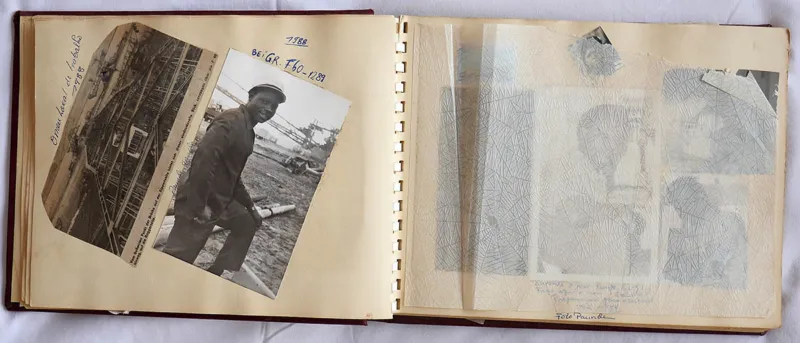
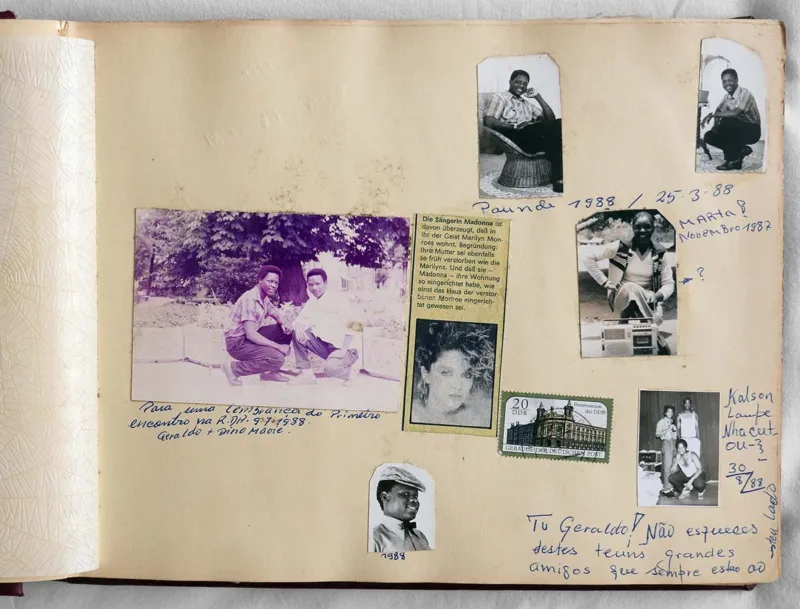
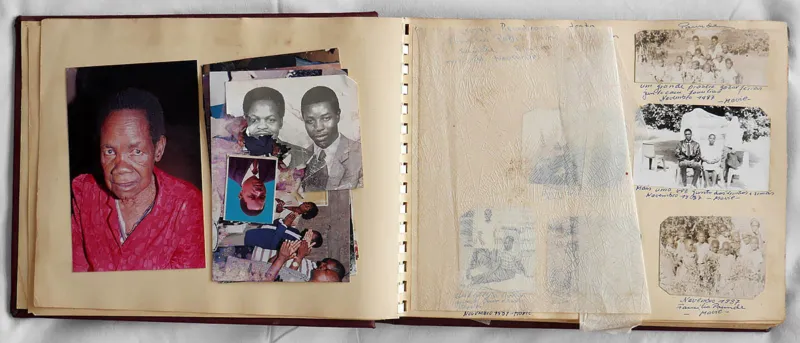
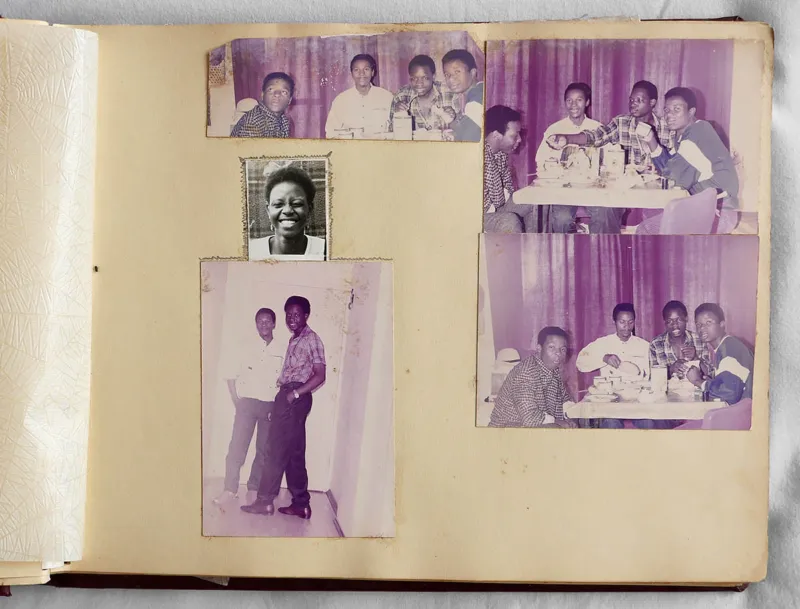
Similarly, Geraldo Paunde was among the Mozambican contract workers who came to the GDR like Tembe, yet he refused the role assigned to him by producing and circulating photographs as alternative media and forging his own visual archive. Paunde grew up in the countryside in Mozambique and moved to the capital, Maputo, in 1979. During this time, he applied to the GDR programme and travelled to East Berlin in September 1983. From there, Paunde continued his journey to Lauchhammer in the Lusatian lignite-mining region, where he was assigned to the Welzow lignite combine. After a three-month German-language course, he began working in the open-cast mine while undergoing vocational training as a mechanical fitter. In 1987, after completing his training, Paunde moved to Hoyerswerda, where he continued to work in the lignite industry. He had already become acquainted with the Keilings, a pastor’s family from Zinna near Torgau, in 1986 and frequently spent weekends with them. Together, they attended meetings with other Mozambicans and representatives of the African National Congress (ANC). Paunde discovered photography through Pastor Keiling, who encouraged him by supplying a camera and later a device for enlarging prints. Paunde later acquired more advanced models, gradually improving his technique through practice. His first camera, which he bought himself, was a small one that used 12-exposure rolls. He initially pursued photography out of curiosity before realising that it could become a viable source of income. He began photographing fellow Mozambican workers in dormitories, offering an alternative to formal studio portraits that captured more personal and meaningful events from everyday life and specific places: ‘(So) the Mozambicans (in Germany, ed.) used my photographs as keepsakes, because if you go to a studio, you stand still or you sit down, you get your photograph taken, and there's no trace of any memory in the shot.’26
26. Geraldo Paunde, interview by Aghi Baleta, n.d., De-Zentralbild, accessed July 15, 2026, https://de-zentralbild.de/en/geraldo-paunde/.
His work became popular among people who wanted to send photographs to their families back home. With time, he helped establish a small photographic lab in his dormitory, where he trained and oversaw a group of five people, teaching fellow contract workers techniques of studio photography. They developed photographs for a small fee, making photography accessible while supporting each other economically. Paunde was invited to photograph events and gatherings, sometimes traveling to other cities, further expanding his experience and role as a community photographer and occasionally publishing his photographs in newspapers. Beyond what is documented in the official records of the Stasi archive, Paunde – similarly to Tembe – practised a form of ‘Eigen-Sinn’ in the form of subtle, everyday modes of resistance expressed through a representational practice of self-articulation and the (re)appropriation of alienated social relations.
In 1991, Paunde was forced to leave the GDR when his work contract ended. Back in Mozambique, he was unable to find employment in his trained profession as a mechanical fitter and felt abandoned by the government as many others in similar situations. He thus relied on photography to make a living and, without a fixed studio, he became a door-to-door photographer, documenting private events, celebrations and political moments during Mozambique's first elections. Despite technological changes and the declining appreciation for printed photography, he still believes in the lasting value of physical photographs as tangible memories. He has carefully preserved many images in private photo albums from his time in Germany, which represent an important archive of personal and collective history – one that, to this day, remains obscured in the official image histories of both the GDR and reunified Germany.
The Untaken, the Inaccessible, the Unshowable
Chetna Vora’s filmic, Dito Tembe’s graphic and painterly, as well as Paunde's photographic practices recall what Ariella Aïsha Azoulay called the ‘Untaken, the Inaccessible, the Unshowable’, when thinking of unrecorded images absent from state archives.
‘(T)he archive as institution assists citizens in forgetting that their citizenship is related to the deprivation of citizenship from others, so that they could protect their privileges as rights and demand to fully exercise their right to enter the archive as if it were just a depository of documents open to all. They continue to ask the archive for documents about those who are deprived of this right, as though the archive, being one of the major players invested in the naturalisation of imperial categories, can produce anything other than propaganda files.’25
This observation is closely tied to the archival practices of the Stasi and to a striking split within GDR visual culture: people and practices that remained largely absent from official media could simultaneously be intensely represented within the secret visual regime of the state. As the GDR’s apparatus of state security, the Stasi systematically gathered, classified, and archived information about individuals and social groups in order to monitor the population and identify, control, and persecute those it regarded as politically suspect or oppositional. After 1989, however, these records acquired a second life. Once produced as instruments of surveillance and repression, Stasi files became important sources for historians, journalists, filmmakers and television producers, and continue to inform media representations and historical narratives of the GDR today. This afterlife presents an archival paradox: while the opening of the files made the mechanisms of state repression visible, it also allowed categories and modes of perception produced by the surveillance apparatus itself to enter subsequent representations of the GDR and of the people who lived there. Their continued use thus corresponds to a broader critique of archives as institutions that can ‘naturalise’ particular categories and ways of seeing, making historically produced taxonomies appear self-evident or given. In this sense, the archive does not merely preserve historical evidence – it can also carry forward the classificatory logic through which the state rendered its subjects visible in the first place.
In this context, it is striking that, besides official press photography and DEFA film production, the private lives and everyday experiences of migrants and GDR contract workers have scarcely been archived or documented from their own perspective, even retrospectively. Only recently have they begun to enter institutional collections through digital archives dedicated to migrant self-representation and transnational histories in the GDR like De-Zentralbild, and other initiatives.28
27. Ariella Aïsha Azoulay, Potential History: Unlearning Imperialism (London: Verso, 2019), 186–87.
28. De-Zentralbild, accessed July 24, 2026, https://dezentralbild.net/en/.
The Unseen Losers of Reunification
While many predominantly white citizens in the GDR and West Germany celebrated the fall of the Berlin Wall in the context of the Peaceful Revolution of 1989, and independent queer associations were finally able to organise officially and gain political visibility, ‘the ripping of the Berlin Wall like a condom’ – metaphorically speaking – didn’t lead to a collapse of state authoritarianism and the beginning of a new era of ‘freedom’. On the contrary, after the fall of the Berlin Wall, many former contract workers were pressured by the GDR government to return home – Geraldo Paunde and Dito Tembe among them. For Mozambican workers, this meant being repatriated to a country still in the grips of a civil war that lasted until 1992. These self-identified ‘Madgermanes’ count themselves among the biggest ‘Wendeverlierer’ (Wende losers) and are still waiting to receive their rightful wages from the Mozambican Ministry of Labour or compensation from the Federal Republic of Germany.
The Berlin Wall’s rubble metaphorically struck those ‘other’ Germans who were born in the country or had lived and contributed their labour in Germany for years, yet were once again classified as the alleged source of all societal ills. The fear of foreign infiltration led to racist pogroms in Hoyerswerda (1991) and Rostock-Lichtenhagen (1992), along with neo-Nazi attacks on, for example, trans activist Charlotte von Mahlsdorf’s Gründerzeitmuseum that same year. These attacks revealed not only a resurgence of far-right violence – often obscured by the GDR state’s official self-image as an antifascist bulwark – but also the deep vulnerability of marginalised lives in a newly unified Germany:
‘At the height of our childhood games, the Berlin Wall had fallen, and suddenly the Kotti was teeming with Ossis. They had come to collect their welcome money from our banks. […] As always, we also stood around there. After all, it was our meeting place. The Ossis gawked at us; we gawked back. Thirty black heads against hundreds of East Germans.’29
In his statement, filmmaker Neco Çelik offers a literal visual depiction of the mistrust felt by people with international backgrounds toward a new Germany that prioritised the integration of ‘predominantly white East Germans, new citizens’, many of whom became themselves ‘losers of the Wende’. In this effort to solidify unity between the former states, those overrepresented in the struggle for recognition became complicit in the oppression of those permanently excluded from sovereignty along racial lines.
29. Neco Çelik, ‘Soziale Häutung,’ in Hilal Sezgin, ed., Manifest der Vielen: Deutschland erfindet sich neu (Berlin: Blumenbar, 2011), 171–174. Translated from German into English by the author.
Ultimately, the question remains: Why did these practices, which recontextualised, demobilised and (re)appropriated the border, fail to enter the dominant regime of visibility and cultural memory, let alone of image circulation? One way of approaching this question is through Paul Virilio's concept of the ‘logistics of perception’, which describes how technologies of vision – photography, cinema, television, video, radar, satellites and digital media – do not merely record reality but actively organise, control and discipline perception and, by extension, what can be thought. Perception, in this framework, is not a private, innocent faculty but a strategic resource no different in kind from the movement of troops or supplies in military logistics. To see here means already to be enlisted. Read in this light, the absence of these border-transgressive media practices from dominant visual culture appears all the more striking within a contemporary media environment of continuous image circulation – one embedded in what McKenzie Wark has called ‘gamespace’. Here, it is not simply a matter of archival omission, but the ongoing triumph of historically constituted regimes of visibility that continue to decide which images deserve to circulate, which are consigned to oblivion, and which are authorized to stand in for history itself. Contrasting with this triumph, the practices of Chetna Vora, Dito Tembe, and Geraldo Paunde articulate a form of transgressiveness – a practice of ‘striking the border’ that resists the nation-state as the primary framework through which identity, mobility, and belonging are understood. Rather than reducing or erasing the complexities of identity, survival strategies or modes of existence, they foreground liminal positions that, following Fatime El-Tayeb’s conception of diaspora, ‘transcend the binary of citizen and foreigner, the linear model of movement from origin to destination,’30 challenging normative notions of (political) community. In doing so, these practices also sit uneasily within the dominant memory cultures that emerged after German reunification, which have largely been structured around the restoration of national unity. Building on forms of identification that emerge beyond and sometimes in resistance to the political structures and norms of modern citizenship, these counter-hegemonic media productions claim space within the nation-state while simultaneously unsettling the presumed alignment among borders, the state and the ‘national community’. Here, what could not be contained within the nation-state's imagination of belonging could scarcely become part of its memory. As Advanced Chemistry sings: ‘one of many, unrecognised, a stranger in my own country’.
One might recall here a now largely forgotten photograph of a demonstration that occurred during the transitional period of the ‘Wende’, on April 24, 1990, under the slogan ‘In- und Ausländer gemeinsam – Menschenrechte sind unteilbar’ (citizens and foreigners together – human rights are indivisible).31 The image condenses the political contradictions of this transitional moment: While migrants and contract workers were increasingly cast as a threat to the emerging national community, the photograph records a competing form of solidarity that refused to make rights and belonging contingent upon nationality. Through ironic reversal, it unsettled the terms of inclusion and the boundaries through which a ‘new’ German national community was coming to define itself. Organised by a coalition of East and West Germans, including people of colour, some with citizenship and others with precarious legal status, the demonstrators carried a sign symptomatic not of the supposed threat of foreign infiltration, but of the real danger posed by their fellow nationals: ‘Foreigners, don’t leave us alone with these Germans!’32
30. Fatima El-Tayeb, European Others: Queering Ethnicity in Postnational Europe (Minneapolis: University of Minnesota Press, 2011), introduction.
31. Demo mit “In- und Ausländern gemeinsam – Unteilbare Menschenrechte,”’ Neues Deutschland, April 24, 1990, 8.
32. An earlier version of this text appeared in Sebastian Hammerschmidt, Kaja Ninnis, and Charlotte Püttmann, eds., Art and Politics: Yearbook of the Guernica Society, vol. 27 (Bielefeld: transcript, 2025), special issue The (De-)Politicisation of Art History: Marxist Traditions since 1968, 179–190.
Bibliography
Bayramoğlu, Yener, and María do Mar Castro Varela. Post/pandemisches Leben. Bielefeld: transcript Verlag, 2020.
Buden, Boris, and Lina Dokuzović. They’ll Never Walk Alone: The Life and Afterlife of Gastarbeiters. Vienna: Edition Steinbauer, 2018.
Çelik, Neco. ‘Soziale Häutung.’ In Manifest der Vielen: Deutschland erfindet sich neu, edited by Hilal Sezgin, 171–174. Berlin: Blumenbar, 2011. Translated from German into English by the author.
Czechowski, Heinz, and Jayne-Ann Igel. ‘Häuser und Träume.’ In Peter-Huchel-Preis Jahrbuch 1990: Ernst Jandl – Texte, Dokumente, Materialien. Leipzig: Reclam, 1991. Translated from German.
Deleuze, Gilles, and Félix Guattari. A Thousand Plateaus: Capitalism and Schizophrenia. Translated by Brian Massumi. Minneapolis: University of Minnesota Press; London: Athlone Press, 1987.
‘Demo: Abolish Frontex.’ Radar Squat. December 18, 2021. Accessed January 2, 2025. https://radar.squat.net/de/event/berlin/stressfaktor/2021-12-18/demo-abolish-frontex.
‘Demo mit “In- und Ausländern gemeinsam – Unteilbare Menschenrechte.”’ Neues Deutschland, April 24, 1990.
Echoes of the Brother Countries – Reader (English). What Is the Price of Memory and What Is the Cost of Amnesia? Or: Visions and Illusions of Anti-Imperialist Solidarities. Berlin: Haus der Kulturen der Welt, 2022.
El-Tayeb, Fatima. European Others: Queering Ethnicity in Postnational Europe. Minneapolis: University of Minnesota Press, 2011.
Geraldo Paunde, interview by Aghi Baleta, n.d., De-Zentralbild, accessed July 15, 2026, https://de-zentralbild.de/en/geraldo-paunde/.
Gilroy, Paul. Against Race: Imagining Political Culture Beyond the Color Line. Cambridge, MA: Harvard University Press, 2000.
Gleeson, Jules Joanne, and Elle O’Rourke. Transgender Marxism. London: Pluto Press, 2021.
Gržinić, Marina. Border Thinking: Disassembling Histories of Racialized Violence. Vienna: Sternberg Press, 2018.
Hammerschmidt, Sebastian, Kaja Ninnis, and Charlotte Püttmann, eds. Art and Politics: Yearbook of the Guernica Society. Vol. 27. Special issue, The (De-)Politicisation of Art History: Marxist Traditions since 1968. Bielefeld: transcript, 2025.
Igel, Bernd. Das Geschlecht der Häuser gebar mir fremde Orte: Gedichte. Frankfurt am Main: Fischer, 1989.
Ich bin meine eigene Frau. Directed by Rosa von Praunheim. Germany: Rosa von Praunheim Filmproduktion, 1992. Film.
Langanke, Heiko. Die extreme Rechte in der Bundesrepublik: Ideen, Ideologien, Strategien. Opladen: Leske + Budrich, 1996.
Leszkowicz, Paweł Paweł. “Contemporary Art and Alternative Queer Archival Strategies in Central and Eastern Europe.” Paper presented at the IFLA WLIC 2017 – Libraries. Solidarity. Society, Session 113, Wrocław, Poland, August 21, 2017.
Linn, Elisa R. ‘Stirrings of the Mouth.’ Starship Magazine, no. 20 (2024): 82–85.
Lüdtke, Alf. The History of Everyday Life: Reconstructing Historical Experiences and Ways of Life. Princeton, NJ: Princeton University Press, 1995.
———. ‘Die DDR als Geschichte: Zur Geschichtsschreibung über die DDR.’ Aus Politik und Zeitgeschichte, no. 36 (1998): 3–16.
Mbembe, Achille. ‘Necropolitics.’ Public Culture 15, no. 1 (2003): 11–40.
———. Necropolitics. Durham, NC: Duke University Press, 2019.
Mignolo, Walter D. Local Histories/Global Designs: Coloniality, Subaltern Knowledges, and Border Thinking. Princeton, NJ: Princeton University Press, 2000.
Müller, Heiner. Germania 3: Gespenster am toten Mann. Cologne: Kiepenheuer & Witsch, 1996.
———. Krieg ohne Schlacht: Leben in zwei Diktaturen. Cologne: Kiepenheuer & Witsch, 1992.
Müller, Helen, and Clemens Pornschlegel. Für alle reicht es nicht. Texte zum Kapitalismus. Edited by Heiner Müller et al. Frankfurt am Main: Suhrkamp, 2017. Translated from German into English by the author.
Parson, Clara-Rosen, and Julian Ibrahim Reich. ‘Fragmente der Kontinuität – Widerstandsgeschichte von BIPoC in Deutschland.’ In Im Osten was Neues? Perspektiven von Migrant_innen – Schwarzen Menschen – Communitys of Color auf 30 Jahre (Wieder-)Vereinigung und Transformationsprozesse in Ostdeutschland, edited by Asiye Kaya, Riham Abed-Ali, and Phương Thúy Nguyễn. Mittweida: Hochschulverlag Mittweida, 2020.
Puar, Jasbir K. ‘Rethinking Homonationalism.’ International Journal of Middle East Studies 45, no. 2 (2013): 336–339.
Reichert, Martin. Die Kapsel: AIDS in der Bundesrepublik. Berlin: Suhrkamp, 2018.
Rosenberg, Jordy. ‘Afterword: One Utopia, One Dystopia.’ In Transgender Marxism, edited by Jules Joanne Gleeson and Elle O’Rourke. London: Pluto Press, 2021.
Schmitz-Berning, Cornelia. Vokabular des Nationalsozialismus. Berlin: De Gruyter, 2010.
Schulman, Sarah. Israel/Palestine and the Queer International. Durham, NC: Duke University Press, 2012.
———. My American History: Lesbian and Gay Life during the Reagan and Bush Years. New York: Routledge, 1994.
Schulman, Sarah, and Elisa R. Linn. ‘What ACT UP Can Teach Us About the Current Health Emergency.’ Frieze, June 5, 2020. Accessed January 2, 2025. https://www.frieze.com/article/what-act-can-teach-us-about-current-health-emergency.
Simmel, Georg. ‘The Stranger.’ In On Individuality and Social Forms, edited by Donald N. Levine, 143–150. Chicago: University of Chicago Press, 1971.
Tümmers, Henning. AIDS: Autopsie einer Bedrohung im geteilten Deutschland. Göttingen: Wallstein, 2017. Translated from German.
Waibel, Harry. Rassismus in der DDR: Drei charakteristische Fallbeispiele aus den 70er und 80er Jahren. Bern and Frankfurt am Main: Peter Lang, 2014.
Wagner, Bernd, ed. Handbuch Rechtsextremismus: Netzwerke, Parteien, Organisationen, Ideologiezentren, Medien. Reinbek bei Hamburg: Rowohlt, 1994.
Anke Wilkening and Katja Krause, ‘Dokument eines Aufbruchs,’ Arsenal – Institut für Film und Videokunst e.V., 2023, accessed July 15, 2026, https://www.arsenal-berlin.de/forum-forum-expanded/archiv/programmarchiv/2023/programm-forum/forum-special/oyoyo/hintergrund-dokument-eines-aufbruchs/.
‘Die Mauer war das Kondom der DDR. AIDS und Homosexualität in den neuen Bundesländern.’ Der Spiegel, no. 42 (October 12, 1992): 126–135.
Elisa R. Linn (Elisa Linn Roguszczak) is a scholar, curator and writer who teaches the program 'Spaces of Appearances: Exhibitions as Counter-Public Spheres' at Bard College Berlin. Linn was co-director of Halle für Kunst Lüneburg e.V. from 2022 to 2025. She is a graduate of the Whitney Independent Study Program. At the Academy of Fine Arts Vienna, she is completing her doctorate in the context of counter-public practices and migratory aesthetics in the GDR. Since 2012, she has co-directed the curatorial collective km temporaer and, since 2021, the Filmclub der polnischen Versager*innen in Berlin-Mitte.
Edited by Gabriela Acha, Olivier Hoffmann and Marie-Alix Isdahl, Mudam Journal provides a space for exploration, artist-led perspectives and critical thinking beyond the exhibition.
Read More about Mudam Journal.